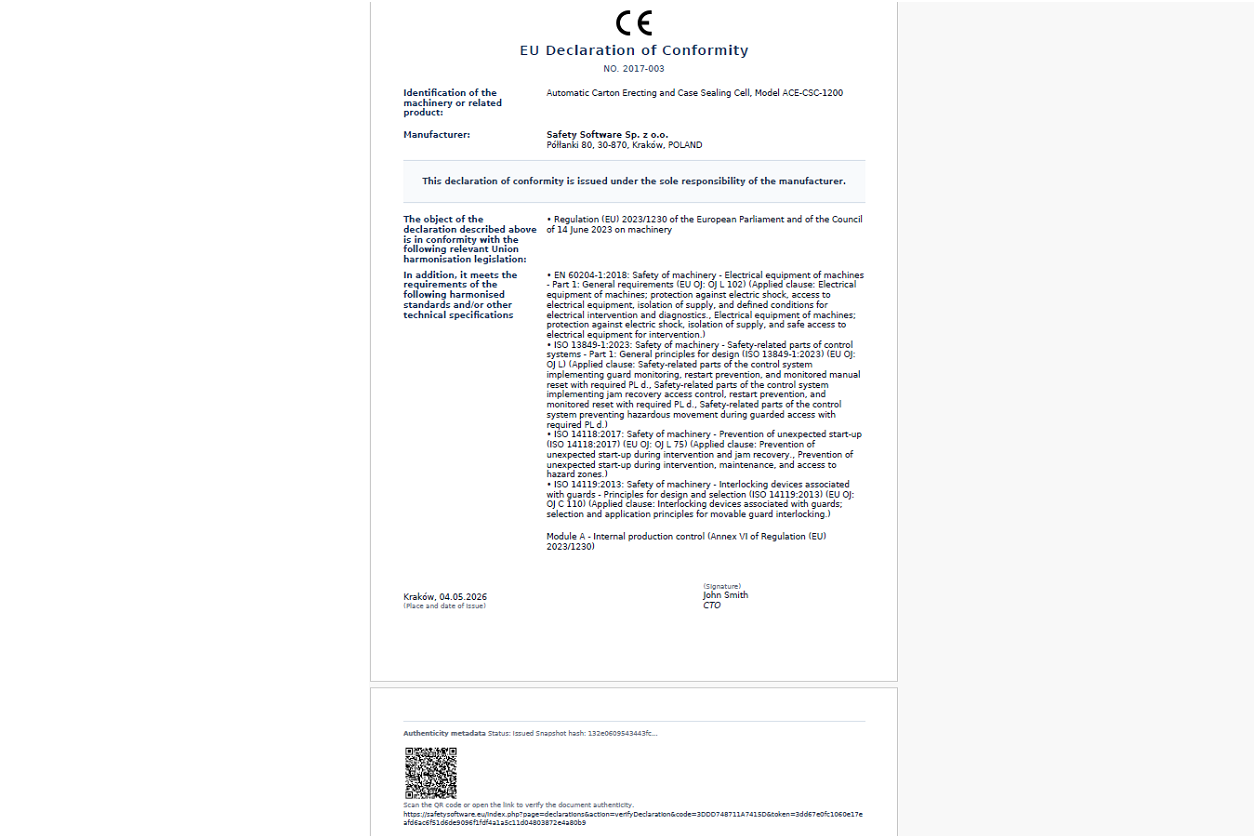
Atitikties deklaracijos pagal Mašinų reglamentą 2023/1230 neturi baigtis kaip bet koks PDF, persiųstas el. paštu ir po savaitės pamirštas. Toks modelis atrodo pakankamas tik iki pirmo nepatogaus klausimo: kuri versija galiojo, kas dokumentą išdavė, ar jis nebuvo pakeistas, ar klientas tikrai turi teisingą egzempliorių ir ar prie mašinos galima greitai patikrinti jo statusą.
Būtent šitą problemą sprendžia naujas SafetySoftware.eu modulis. Čia atitikties deklaracija ir įmontavimo deklaracija nebėra atsitiktiniai failai. Jos tampa kontroliuojamais dokumentais su numeriu, statusu, versijų valdymu, audito pėdsaku, pasirašytu PDF artefaktu ir viešu patikros puslapiu, pasiekiamu per nuorodą bei QR kodą.
Atitikties deklaracijos pagal Mašinų reglamentą 2023/1230 nėra tik PDF
Praktikoje labai daug įmonių vis dar gyvena pagal paprastą schemą: kas nors paruošia deklaraciją, eksportuoja PDF, išsiunčia klientui ir tikisi, kad tema uždaryta. Neuždaryta. Kai prasideda auditas, rinkos priežiūros klausimai, garantinis ginčas ar techninis incidentas, tada paaiškėja, kad paprastas failas nieko nekontroliuoja. Jis neturi aiškaus gyvenimo ciklo, neturi viešos patikros kelio ir nepasako, ar būtent šis dokumentas buvo aktualus konkrečią dieną.
SafetySoftware.eu čia įveda tvarką. Deklaracija sistemoje turi numerį, aiškų statusą, versiją, istoriją ir ryšį su pasirašytu PDF. Kitaip tariant, dokumentas nustoja būti priedu prie laiško. Jis tampa kontroliuojamu dokumentu, kurį galima parodyti, patikrinti ir, jei reikia, apginti faktais, o ne prisiminimais.
Atitikties deklaracijos pagal Mašinų reglamentą 2023/1230: privaloma atitikties vertinimo procedūra
Viena svarbiausių naujo modulio dalių yra atitikties vertinimo procedūros valdymas pagal Reglamentą (ES) 2023/1230. Tai ne dekoratyvinis laukas formoje ir ne eilutė, kurią galima palikti vėlesniam laikui. Reglamentas reikalauja, kad atitikties deklaracija būtų parengta pagal V priedo A dalies struktūrą ir apimtų elementus, kylančius iš taikomo atitikties vertinimo modulio. Kitaip sakant, gamintojas turi aiškiai parodyti ne tik kam produktas atitinka, bet ir kaip ta atitiktis buvo įvertinta.
Todėl SafetySoftware.eu naudotojas deklaracijoje gali nurodyti tinkamą variantą, o sistema verčia šį pasirinkimą padaryti sąmoningai, o ne palikti migloje.
Kuris atitikties vertinimo modulis taikomas
- A modulis — vidinė gamybos kontrolė.
- B+C modulis — ES tipo tyrimas, po kurio taikoma atitiktis tipui remiantis vidine gamybos kontrole.
- G modulis — atitiktis remiantis vienetine patikra.
- H modulis — atitiktis remiantis visapusiu kokybės užtikrinimu.
Mašinoms, kurios nepatenka į I priedą, paprastai taikomas A modulis, tai yra vidinė gamybos kontrolė. O kai kalbame apie mašinas iš I priedo A arba B dalies, pasirinkimas jau priklauso nuo kategorijos ir nuo to, ar įvykdytos reglamente nustatytos sąlygos. Čia nebelieka vietos improvizacijai. Pasirinktas modulis turi sutapti su realiai taikyta atitikties vertinimo procedūra.
Ir tai svarbu ne vien teisiniam grožiui. Jei deklaracijoje nėra aiškiai parodyta, kokia atitikties vertinimo procedūra taikyta, dokumentas atrodo tvarkingas tik iš tolo. Priėjus arčiau matosi spragos. O spragos CE dokumentacijoje brangiai kainuoja būtent tada, kai mažiausiai norisi aiškintis.
QR kodas ir nuoroda į viešą deklaracijos patikrą
Išduotai deklaracijai galima sugeneruoti viešą nuorodą ir QR kodą, vedantį į dokumento patikros puslapį. Tą nuorodą galima perduoti klientui, įtraukti į techninę dokumentaciją, nurodyti instrukcijoje arba naudoti kaip papildomą informacijos laikmeną prie pačios mašinos, pavyzdžiui, šalia vardinės lentelės.
Toks sprendimas tiesiogiai atitinka Mašinų reglamento 2023/1230 kryptį. Gamintojas gali užtikrinti prieigą prie atitikties deklaracijos per interneto adresą arba per mašininiu būdu nuskaitomą kodą, o skaitmeninė deklaracija turi būti prieinama numatomą mašinos gyvavimo laikotarpį, bet ne trumpiau kaip 10 metų. Tai ne smulkmena. Tai reiškia, kad dokumentas turi būti ne tik sukurtas, bet ir išlaikytas pasiekiamas bei patikrinamas.
Nauda labai praktiška. Klientui nebereikia knistis senų laiškų archyve. Serviso technikui nereikia spėlioti, ar jo rankose teisingas failas. Auditorius gali atsidaryti viešą puslapį ir iš karto matyti pagrindinius duomenis. O žmogui prie mašinos pakanka nuskenuoti QR kodą ir patikrinti deklaracijos statusą vietoje.
Atitikties deklaracijos pagal Mašinų reglamentą 2023/1230: ką turi apimti dokumentas
Pagal Reglamentą (ES) 2023/1230 neužtenka turėti gražiai suformatuotą formą. Deklaracijoje turi būti konkretūs elementai. SafetySoftware.eu modulis apima svarbiausius V priedo A dalyje numatytus duomenis, kad deklaracija būtų ne tik patogi, bet ir logiškai pilna.
- mašinos arba susijusio produkto identifikavimą;
- gamintojo duomenis;
- įgaliotojo atstovo duomenis, jeigu taikoma;
- deklaracijos numerį;
- deklaracijos dalyką;
- nurodytą taikomą Sąjungos derinamąjį teisės aktą;
- taikytus harmonizuotus standartus, bendrąsias specifikacijas ar kitas technines specifikacijas;
- taikytą atitikties vertinimo procedūrą ir atitinkamą atitikties vertinimo modulį;
- paskelbtosios įstaigos duomenis, jei ji dalyvavo procedūroje;
- išdavimo vietą ir datą;
- deklaraciją pasirašiusį asmenį ir jo funkciją;
- papildomą informaciją, reikalingą konkrečiam atvejui.
Čia slypi esminis pokytis. Deklaracija turi parodyti ne vien rezultatą, bet ir kelią iki to rezultato. Kitaip tariant, ne tik tai, kad gaminys atitinka reikalavimus, bet ir kokia teisine bei technine logika ta išvada pasiekta.
Pasirašytas PDF kaip kontroliuojamas dokumentas
SafetySoftware.eu leidžia prie deklaracijos pridėti pasirašytą PDF failą. Praktikoje schema paprasta ir normali: naudotojas sugeneruoja deklaraciją, pasirašo ją kvalifikuotu elektroniniu parašu pasirinktoje priemonėje ir tada įkelia pasirašytą versiją į sistemą.
Čia svarbiausia tai, kad pasirašytas PDF nelieka kaboti kažkur šalia proceso. Jis susiejamas su konkrečia deklaracija ir konkrečia jos versija. Sistema išsaugo failo pavadinimą, SHA-256 kontrolinę sumą, failo dydį, pasirašymo struktūros patikros statusą ir ryšį su dokumento versija.
Toks modelis iš karto nuima klasikinį chaosą, kai vienas žmogus turi vieną failą, kitas turi kitą, o po pusmečio niekas nebežino, kuris buvo pasirašytas ir ar apskritai buvo. Pasirašytas PDF tampa kontroliuojamos atitikties dokumentacijos dalimi, o ne atsitiktiniu priedu iš darbalaukio.
Atitikties deklaracijos pagal Mašinų reglamentą 2023/1230 su versijų valdymu ir statusu
Atitikties deklaracijos negalima tvarkyti taip, lyg tai būtų paprastas juodraštis, kurį galima tyliai perrašyti po išdavimo. Išduotas dokumentas turi turėti aiškų statusą ir istoriją. Todėl modulis skiria darbinius, išduotus, atšauktus ir pakeistus dokumentus.
Jeigu po išdavimo deklaraciją reikia taisyti, turi vykti pakartotinio išdavimo procesas. Tai svarbu ne dėl biurokratijos. Tai svarbu todėl, kad po kelių mėnesių ar metų turi būti aišku, kuri versija buvo pirminė, kuri ją pakeitė ir kodėl apskritai prireikė pakeitimo. Būtent čia versijų valdymas ir audito pėdsakas pradeda dirbti realų darbą.
Tokios funkcijos tampa ypač svarbios audito metu, gavus reklamaciją, susidūrus su rinkos priežiūros klausimais ar aiškinantis ginčą su klientu. Kai istorija matoma sistemoje, argumentuoti daug lengviau. Kai istorijos nėra, prasideda spėlionės. O spėlionės atitikties valdyme yra blogas verslo modelis.
Ką tai realiai keičia gamintojui
Naujas deklaracijų modulis padeda pereiti nuo situacijos „turime kažkokį PDF“ prie kontroliuojamo atitikties proceso. Po šio atnaujinimo naudotojas gali:
- parengti atitikties deklaraciją arba įmontavimo deklaraciją;
- pasirinkti tinkamą dokumento tipą;
- nurodyti taikomus teisės aktus ir standartus;
- privalomai apibrėžti atitikties vertinimo procedūrą atitikties deklaracijai;
- pasirinkti A, B+C, G arba H modulį;
- įtraukti paskelbtosios įstaigos duomenis, jei procedūra to reikalauja;
- generuoti PDF;
- išduoti dokumentą kaip kontroliuojamą versiją;
- pridėti elektroniniu būdu pasirašytą PDF;
- pateikti dokumentą klientui per nuorodą;
- generuoti QR kodą viešai patikrai;
- atšaukti deklaraciją arba pakeisti ją nauja versija;
- išlaikyti visą veiksmų istoriją dokumente.
Trumpai tariant, deklaracija čia nebeatsiranda paskutiniame žingsnyje kaip formalumas. Ji tampa platesnio proceso dalimi: nuo rizikos vertinimo, reikalavimų ir standartų parinkimo iki galutinio, kontroliuojamo atitikties dokumento išdavimo.
Kodėl tai svarbu ne tik atitikties specialistui
Nauda pasiskirsto labai aiškiai. Gamintojas gauna didesnę dokumentų kontrolę. Klientas gauna paprastesnę prieigą prie deklaracijos. Auditorius gauna skaidresnį patikros kelią. Servisas gali greitai pasitikrinti dokumentą prie mašinos. CE komanda sumažina riziką, kad apyvartoje liks neaktuali arba nepilna deklaracijos versija.
Ir čia nėra jokios teorijos dėl teorijos. Jei gamyboje ar servise naudojamas ne tas dokumentas, pasekmės būna labai žemiškos: gaištamas laikas, stabdomi paleidimai, stringa priėmimai, kyla klausimų dėl ženklinimo, daugėja aiškinimų klientui ir viduje. Kai dokumentacija tvarkoma silpnai, viskas atrodo pakenčiama iki pirmo konflikto. Kai konfliktas ateina, pasidaro aišku, kad tvarkingas deklaracijos valdymas buvo ne prabanga, o elementari higiena.
SafetySoftware.eu kryptis: skaitmeninė CE dokumentacija pagal naujus reikalavimus
Reglamentas (ES) 2023/1230 akivaizdžiai stumia mašinų dokumentaciją link didesnio skaidrumo, geresnės kontrolės ir platesnio skaitmeninės formos naudojimo. Atitikties deklaracija gali būti pateikiama per nuorodą arba QR kodą, tačiau ji vis tiek turi likti kontroliuojamas dokumentas: aktualus, atsekamas ir patikrinamas.
Būtent ta kryptimi vystomas SafetySoftware.eu. Naujas modulis leidžia kurti deklaracijas, kurios nėra statiškas failas. Jos susietos su projektu, versija, atitikties vertinimo procedūra, pasirašytu PDF artefaktu ir viešu patikros puslapiu. Tai paprasta mintis, bet jos pasekmės labai rimtos: kai reikia įrodyti ne tik kad produktas atitinka reikalavimus, bet ir kaip tas vertinimas buvo atliktas, gera deklaracija tampa ne priedu, o gynybos linija.
Taip ir turi būti. Atitikties deklaracija nėra popierius dėl popieriaus. Tai formalus gamintojo pareiškimas, kurį reikia sugebėti parodyti, patikrinti ir apginti. Jei dokumentas to neatlaiko, problema ne formate. Problema procese. O būtent procesą šis modulis ir sutvarko.